Te Atakura
Te Atakura
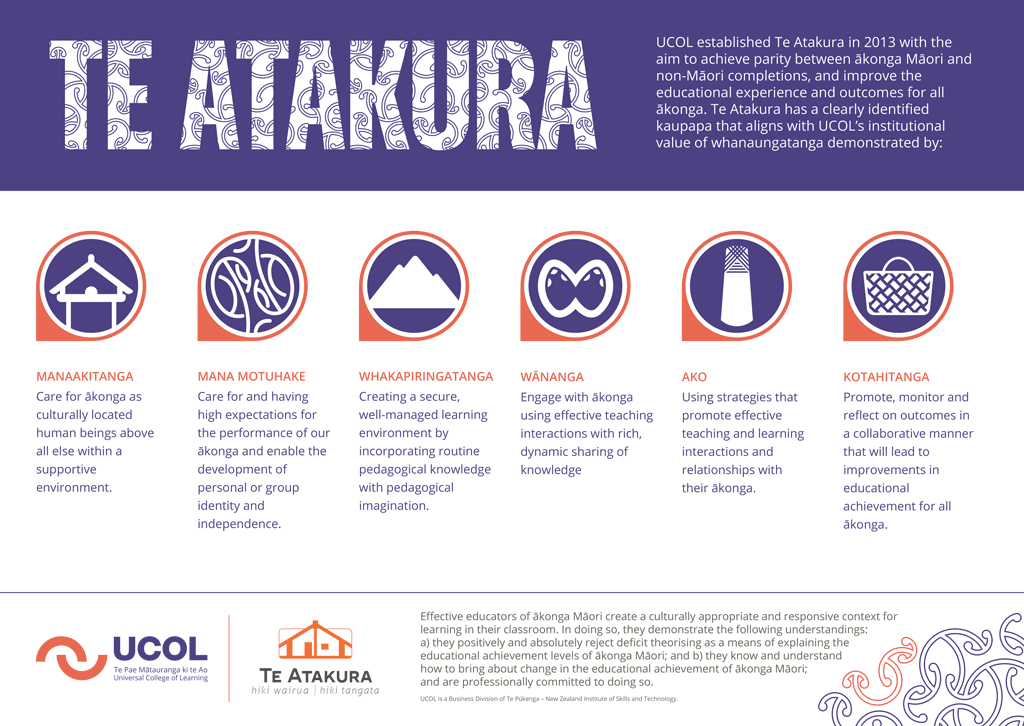
Te Atakura is a culturally responsive, relationships-based approach, grounded in research and guided by kaupapa Māori values, towards achieving ōritetanga (equity) within UCOL.
It focuses on the educational experience of ākonga Māori in a way that enables the organisation better to support the educational experience and outcomes for ākonga Māori and all other ākonga.
Ākonga (students) identify kaiako (teachers) with high-caring and high-teaching skills as the most effective. Since 2013 when UCOL introduced Te Atakura, the key impacts for ākonga include:
increased successful course completion (for both ākonga Māori and all other ākonga)
increased qualification achieved per Equivalent Full Time Student (for both ākonga Māori and all other ākonga)
sustained higher rates of change in course completion (for both ākonga Māori and all other ākonga)
increased participation rates for ākonga Māori
increased positive ākonga Māori voice

Where does it come from?
Te Atakura began as a UCOL initiative, originally based on practice that came from the extensive research of Emeritus Professor Russell Bishop. It is a relationships-based, teaching and learning approach, which focuses on the importance of relationships in bringing about educational success for Māori and marginalised ākonga.
What did ākonga voices say in the research?
Ākonga Māori and their whānau talked about the main influence on their educational achievement in terms of relationships, particularly those between kaiako and ākonga but also including all the relationships in the educational community. They wanted to improve the learning environment for ākonga Māori, as well as their self-esteem, cultural identity, and educational achievements. Ākonga Māori told the researchers that they valued high-quality relationships with their kaiako and intuitively knew whether a kaiako valued the relationship they had with them. The quality of the learning relationship impacted on ākonga performance, in both achievement and attendance.
What did the ākonga voice at UCOL say?
Responses of ākonga Māori in the focus groups held at UCOL in 2013 suggested that they valued their relationships with their kaiako and saw this as an important aspect that helped with their learning. One ākonga, for instance, talked about getting to know kaiako and their teaching style to enable a better teaching and learning relationship. When asked to describe the characteristics of a 'great' kaiako, ākonga responses suggested that these were kaiako with good subject knowledge and the ability to engage and interact well with ākonga in a respectful manner, allowing them to bring their culture into the classroom and succeed as Māori.
What can I expect to see from Te Atakura as an ākonga at UCOL?
You may see kaiako across UCOL being observed while teaching classes by Te Atakura coaches. Observations may happen anywhere that teaching and learning happens such as in your classrooms, practical workshops/settings, or online.
You may be asked to give voice/feedback at the end of a Te Atakura observation in your class. This voice helps the coach and your kaiako reflect on ākonga engagement in the learning.
Ākonga Māori may also be asked to be part of an ākonga Māori focus group. These focus groups are a valued opportunity for kaiako and leaders to hear what ākonga Māori are thinking in terms of their learning experience and educational experience.